-
Free Consultations
858-523-8444
Apply Now
Below are common features investors look for in DSCR loans in Toledo. Exact terms depend on the property type, borrower profile, and market.
30-year fixed with interest-only options up to 10 years (when available)
Cash-flow focused approval based primarily on the property's income potential
FICO 650+ is a typical starting point for many programs
Up to 75% LTV depending on DSCR, property, and borrower profile
$75,000 to $5,000,000 loan amounts
Eligible property types: 1–4 unit rentals, and in some cases select multifamily or mixed-use (program dependent)
If you are not sure whether your property fits DSCR guidelines, we can review the address, rent strategy, and exit plan and point you toward the best structure.

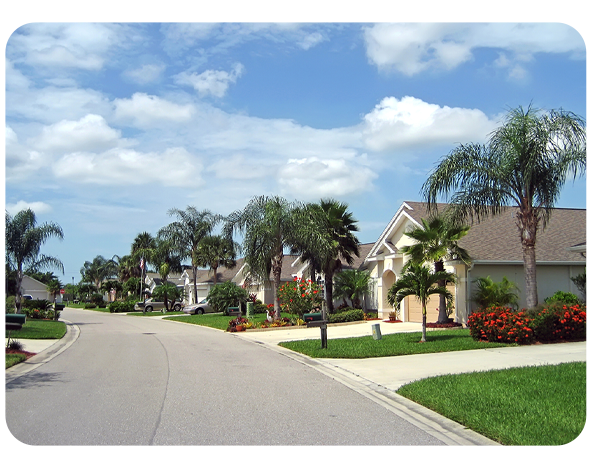
In the Toledo rental market, investors typically focus on neighborhood-level rent strength, tenant demand, and the relationship between purchase prices and achievable rents. DSCR financing works best when the property income profile supports the payment and the long-term hold strategy makes sense.
Toledo housing occupancy is about 53.3% owner-occupied and about 46.7% renter-occupied. The median gross rent is $901, the median household income is $49,724, and the median value of owner-occupied housing units is $114,500. These figures are from U.S. Census Bureau ACS 2020-2024 5-year estimates (released January 29, 2026).
For investors, Toledo often comes down to staying disciplined on the rent to price relationship, then tracking expenses such as taxes, insurance, utilities, and maintenance so cash flow stays predictable.
Toledo market data points to highlight:
Owner-occupied: 53.3% and renter-occupied: 46.7%
Median gross rent: $901
Median household income: $49,724
Median value of owner-occupied housing units: $114,500
Typical investor targets: 1 to 4 unit rentals, single family rentals, and small multifamily when rent supports the payment
Local constraints to watch: property taxes, insurance costs, HOA rules where applicable, and older home maintenance in certain pockets
A Toledo DSCR loan is an investor-focused mortgage where underwriting emphasizes the property's cash flow. Instead of heavily weighting W-2 income, tax returns, or debt-to-income ratios, DSCR lenders look at how the subject property performs as a rental.
DSCR is typically calculated by comparing the property's gross rent (or market rent) against the proposed monthly housing payment (principal, interest, taxes, insurance, and HOA when applicable). If the ratio meets the program guidelines, the loan may be approved even when personal income documentation is limited.
While DSCR loans are often more streamlined, you should still expect a clean file. Common documentation includes:
ID and basic borrower information
Entity documents if purchasing in an LLC (if allowed by the program)
Purchase contract or payoff statement (refinance)
Property details, insurance, and title information
Rent documentation (lease, rent roll, or market rent via appraisal)
Bank statements or asset verification (program dependent)

Investors choose Toledo DSCR loans because the structure aligns with how rental real estate actually performs. Common reasons include:
Portfolio growth: Add properties without the bottleneck of traditional income documentation.
Flexible borrower profiles: Works well for self-employed borrowers and investors with complex tax returns.
Focus on the asset: Approval is driven primarily by the rental property's strength and leverage profile.
Speed and simplicity: Streamlined documentation compared to many conventional investment loans.
DSCR loans are frequently used for:
Purchasing a long-term rental in Toledo
Refinancing to lower payment or improve cash flow
Cash-out refinancing to redeploy equity into additional properties
Converting a property from short-term use to long-term rental (guidelines vary)
Stabilized rentals where lease terms support predictable income

Traditional investment mortgages often focus heavily on personal income, debt-to-income ratio, and tax return analysis. DSCR financing is different because it is designed around rental performance.
DSCR may be a fit if:
You want the loan to be evaluated primarily on the rental property
Your tax returns show deductions that reduce usable income
You are scaling beyond a couple properties and want a smoother process
You want long-term fixed financing with investor-friendly underwriting
Conventional may be a fit if:
Your DTI is strong and you want the lowest possible rate
The property type is not DSCR-friendly
You prefer agency-style guidelines
One of the most common investor paths is:
Acquire a rental with the right leverage
Stabilize rent and improve operations
Lock in long-term financing with a DSCR loan
Repeat as the portfolio grows
The key is matching the loan type to the plan. If the property needs work first, DSCR may not be the first step, but it can be the long-term takeout once stabilized.
Not every deal is ready for DSCR on day one. If the property needs renovations, lease-up, or repositioning, there are other investor loan structures that may fit better:
Value-add / rehab financing (ARV-based funding for properties that need work)
Bridge financing (short-term interest-only options for speed and leverage)
Foreign investor financing (programs that do not require U.S. credit in many cases)
Blanket or portfolio loans (multiple properties under one loan)
High-equity streamlined options (lower leverage with simplified qualification)
If you tell us your goal and timeline, we can match you to the right structure and build a clean path to permanent financing.
DSCR stands for Debt Service Coverage Ratio. It is a measure lenders use to evaluate whether rental income supports the monthly housing payment.
Many DSCR programs are designed to reduce reliance on tax returns, but documentation requirements vary by lender and scenario.
Often yes, depending on property seasoning, valuation, and program guidelines.
Many DSCR programs allow 1–4 unit rentals. Guidelines vary for larger multifamily or mixed-use properties.
Not necessarily. Some programs work for newer investors, but leverage and pricing may differ depending on experience and reserves.
Some DSCR lenders allow LLC or entity vesting, but it is program-specific. We can confirm based on your scenario.
We provide DSCR loan options across the lower 48. Here are some cities where we have recently provided DSCR loan content, though our coverage is not limited to just these markets:
Don’t see your city? We work with real estate investors across the lower 48.